Pressure Washing Runoff Rules: Where Does the Dirty Water Go?
The basic rule: only rain goes in a storm drain. Wash water from pressure washing carries soap, oil, grease, and dirt. Letting it flow into a storm drain is illegal under the federal Clean Water Act. Professional crews block the drains, collect the wash water with berms, mats, or vacuum recovery systems, and dispose of it properly.
⚡ QUICK SUMMARY
Storm drains flow to creeks and the Bay untreated. Under the Clean Water Act, wash water from pressure washing cannot go into a storm drain. Crews must capture it, collect it, and dispose of it the right way, usually to a landscaped area or the sanitary sewer with permission. Vacuum recovery systems are how pros do this on commercial jobs.
Pressure washing water runoff rules trip up a lot of property owners. Most never think about the dirty water at all. One power washing job with a commercial pressure washer can use hundreds of gallons. That waste water picks up oil, grease, soap, and grime, and it all has to go somewhere. Where it goes decides whether your cleaning was legal, or a problem.
Action Pressure Washing LLC is a family owned, environmentally friendly pressure washing company in Brentwood, California. Wash water recovery is a core part of how we work. We capture and reclaim dirty wash water on every job instead of letting it run into storm drains. Hospitals, shopping centers, and property managers across Contra Costa County hire us for exactly this reason.
What Are the Rules for Pressure Washing Runoff?
The rule of thumb across the country is simple: only rain down the storm drain. Waste water from a pressure washer is wastewater, and wastewater needs proper disposal. The federal Clean Water Act makes it illegal to discharge pollutants into US waters without a permit. Storm drains count, because they empty into creeks, rivers, and bays. The EPA's National Pollutant Discharge Elimination System (NPDES) is the program behind those rules. Cities and counties run local stormwater programs under it. They can fine businesses that let wash water reach a drain.
Wastewater from cleaning is not treated like rain. Soap counts as a pollutant. So do detergents, chemical cleaners, oil, grease, paint chips, and even plain dirt in large amounts. That is true for gas stations getting degreased and for a simple storefront sidewalk rinse with chemical cleaners.
Why Can't Wash Water Go Into Storm Drains?
Because in most of the Bay Area, the storm drain system is a straight pipe to nature. The sanitary sewer carries water from sinks and toilets to a treatment plant. Storm drains do not. They carry runoff from streets and parking lots straight to the nearest creek and out to the Bay with no treatment at all. Water quality suffers every time wastewater sneaks in. Whatever goes in the drain ends up in the water where fish and other aquatic life live.
What pressure washing runoff can carry
Oil and grease - From driveways, parking lots, dumpster pads, and drive-thrus. Toxic to aquatic life in small amounts.
Soap and cleaning chemicals - Even biodegradable detergents harm fish and strip the protective coating off their gills. Pollution does not need to be dramatic to do damage.
Dirt and debris - Sand and sediment cloud the water, smother habitat, and clog storm drains.
Paint chips and heavy metals - Old surfaces shed contaminants you cannot see once they are in the runoff.
⚠️ Liability Note
Property owners can be held responsible for illegal discharge from work done on their property, even when a contractor caused it. Asking one question protects you: how will you handle the wash water?
What Is Wash Water Recovery?
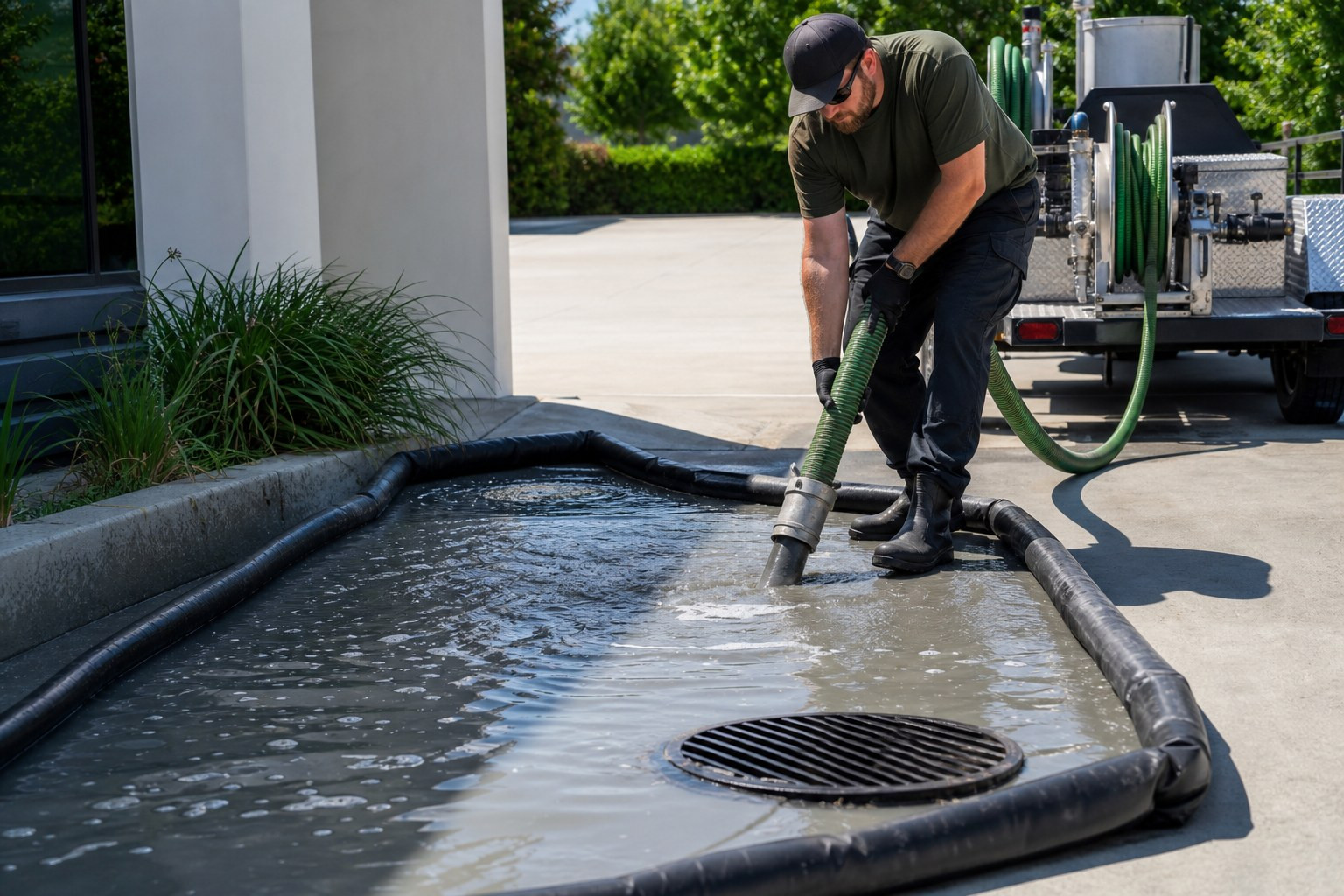
Wash water recovery means the dirty water never runs off. The crew contains it, collects it, and disposes of it the right way. These best management practices are what cities expect from professional power washing services. Here is how it works on a real job:
1Block and protect the drains
Storm drain covers, berms, and containment mats seal off every drain in the work area before any power washing starts.
2Contain the water
Berms and containment mats direct the wash water to a low point instead of letting it run into streets or spread across the property.
3Collect it
A vacuum recovery system, sump pump, or vac system pulls the collected wastewater into a holding tank as we work. Some recovery trucks add filtration so the water can be reused on the job.
4Dispose of it properly
The wastewater goes to a landscaped area or the ground where it can filter through soil, to the sanitary sewer with permission, or to a disposal facility, based on local rules. Never the storm drain.
Want your property cleaned the compliant way? That is the only way we do it.
Get a Free EstimateWhat Are the Regulations for Pressure Washing in California?
California cities and counties run stormwater programs under the statewide NPDES permit system. The details vary city by city. But Bay Area programs all follow the same core rule: no wash water in the storm drain. Commercial jobs get the most attention. Parking garages, drive-thrus, and dumpster pads carry the most grease and oil. Your city's stormwater or public works office can give you the exact local requirements.
The practical takeaway for property owners: hire a crew that brings wash water recovery equipment. If a bidder cannot explain their containment and recovery plan in one minute, the low quote may cost you later.
Does Recovery Change the Result?
Not at all. The surface gets the same deep clean, whether it is a house driveway or 50,000 square feet of garage floor. The only difference is where the dirty water ends up. Capture, filtration, and reuse happen behind the scenes while the washer does its work. Our crew has cleaned everything from medical facility entries to full parking structures with recovery equipment running the whole time. See the results in our before and after gallery or learn more about our commercial pressure washing service.
“It looked as if someone had poured new concrete after ACTION finished... I can't thank them enough!”
- Patricia Gerhardt, Action Pressure Washing client
About the Team
Action Pressure Washing LLC is a family owned pressure washing company in Brentwood, California. Our 5-person crew cleans commercial and residential properties across Contra Costa County and the Bay Area, and we bring wash water recovery equipment to every job.
Keep Your Property Clean and Compliant
Wash water recovery on every job. No shortcuts, no storm drain surprises.
| Call (925) 626-4768 → | Get a Free Estimate |
