How to Remove Oil Stains From Concrete (And When to Call a Pro)
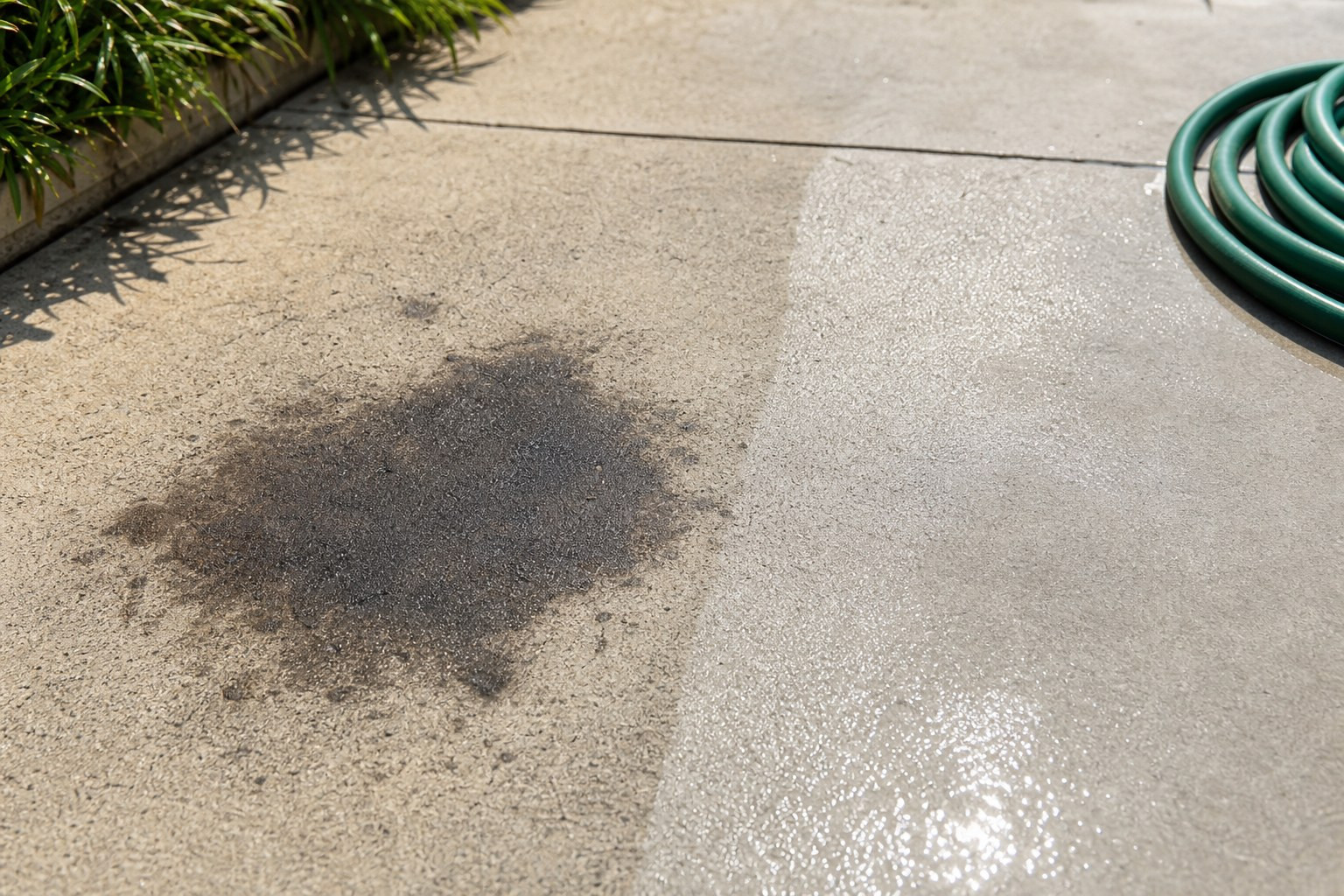
To remove oil stains from concrete, soak up fresh oil with cat litter, then scrub the spot with a grease-cutting dish soap or a paste of powdered laundry detergent, let it sit, and rinse. Old or deep oil stains need a commercial cleaner or a poultice, and often a pro with heated equipment. Concrete is porous, so the longer oil sits on the surface, the deeper it goes.
⚡ QUICK SUMMARY
Fresh oil: absorb it first. Cat litter works best while the stain is still wet (Bob Vila). Set-in oil: degrease, scrub, rinse, repeat. Dish soap, laundry detergent paste, baking soda, or a concrete degreaser all help. Deep, old stains usually need a pro with hot water. Cleaning a driveway costs about $100 to $250 (HomeAdvisor, 2025). Never seal over an oil stain; the oil comes back through.
Oil stains are the most common mark we see on East Bay driveways, garage floors, and parking lots. A car drips, the concrete drinks it in, and a dark spot sets up for years. The good news: most fresh stains come out with things you already own. This post covers what works, what does not, and how to know when it is time to call a professional.
Action Pressure Washing LLC is a family owned pressure washing company in Brentwood, California. Our 5-person crew cleans homes and commercial properties across Contra Costa County and the East Bay. We bring wash water recovery equipment to every job, so dirty water never runs into a storm drain.
Why Do Oil Stains Set Into Concrete?
Concrete looks solid, but it is full of tiny pores. Motor oil is thin and soaks in within minutes. Sun bakes it in. Rain does not wash it out; it spreads it. That is why a stain you ignored in July looks bigger in October. Gasoline, gas from a spilled can, brake fluid, and grease from vehicles leave the same kind of stains on concrete surfaces. The fix depends on one thing: how long the oil has been there.
Rule of thumb: a stain under a week old is a DIY job. A stain that has been there for months, or covers a big area, usually needs heat and a commercial degreaser.
How Do You Remove a Fresh Oil Stain From Concrete?
Fresh spills are the easy case. Act fast and follow these steps:
1Absorb the excess oil
Pour granulated cat litter, sawdust, or baking soda over the spot. Press it in with your shoe. Leave it soaking for a few hours, or overnight for a big spill. Sweep it up, bag it, and throw it in the trash.
2Apply a grease cutter
Squirt grease-cutting dish soap on the stain, or spread a paste of powdered laundry detergent and a little water. Let it sit 15 to 30 minutes.
3Scrub with a stiff brush
Use a stiff nylon brush or push broom. Work in circles. Do not use a wire brush; it scratches the concrete surface. Sweep up any loose powder when done.
4Rinse and repeat
Rinse with a hose. If a shadow remains, repeat steps 2 and 3. Two or three rounds is normal.
Cat Litter or Kitty Litter: Absorb First
Plain clay kitty litter is the cheapest absorbent you can buy. Skip the clumping kind. Gravel-size litter does not absorb well. Crush it a bit with your foot so the powder makes full contact with the oil. Kitty litter, sawdust, or even cornstarch all work. The key is to pull the oil up before you add any liquid.
Dish Soap, Baking Soda, or Laundry Detergent
Dish soap breaks up grease. Baking soda is a mild abrasive that lifts grime without scratching. Powdered laundry detergent does both. Home experts recommend these household methods most. Many say store-bought asphalt and concrete cleaners do not work much better, per Bob Vila.
How Do You Remove Old Oil Stains on Concrete?
Old oil stains need stronger chemistry and more time. The goal is to pull the oil back out of the concrete, not just clean the surface. Try these methods in order:
Methods for set-in oil stains
Concrete degreaser - Alkaline degreasers from the hardware store break down petroleum. Apply, let it sit as directed, scrub, rinse.
Poultice - Mix an absorbent (like cat litter or baking soda) with a solvent such as acetone into a paste. Spread it thick, cover with plastic, and let it draw the oil out overnight.
Microbial cleaners - Some products use bacteria that eat oil over several days. Slow, but good on big, faint stains and light grime.
Heated pro cleaning - Heat thins the oil and lifts it out of the concrete. This is the step most homeowners cannot do with a rental cold-water machine.
When to Use a Commercial Cleaner or Degreaser
Use a commercial cleaner when dish soap fails twice. Products like Purple Power and other alkaline degreasers are made for garage floors and shop floors. Follow the label. Wear gloves and eye protection. Rinse well so the solution does not sit and etch the surface.
Muriatic Acid and Solvents: Use With Care
Some online advice says to use muriatic acid or strong solvents on tough stains. We do not recommend it for homeowners. Acid can etch concrete, burn skin, and harm plants. Solvents like acetone are fine in a poultice, but never pour them straight onto the floor. Safety first.
⚠️ Avoid these mistakes
Do not seal a driveway to hide an oil spot. The oil will work its way back to the surface. Clean it first, let the concrete dry fully, then seal. And skip full-strength bleach near plants and pets; it harms lawns and can discolor concrete.
Stubborn stains on your driveway or lot? Send us a photo and we will tell you if it will lift.
Get a Free EstimateDoes Hot Water Lift Oil Stains Better Than Cold?
Yes. A cold water pressure washer alone usually will not remove an oil stain. It cleans the surface, but the oil stays deep in the concrete and often looks darker once it dries. Heat is the difference. Industry guidance for parking decks calls for hot water machines at 2,500 to 4,000 PSI. Cold rinsing is less effective on oil and grease, per Parking Professional (2023).
On our commercial jobs, oil is the daily enemy. Parking stalls, drive lanes, and dumpster pads all collect it. Our process is degreaser first, then heat, then wash water recovery so the oily runoff never reaches a storm drain. In California, sending anything but rain into a storm drain is prohibited, per the Contra Costa Clean Water Program.
2,500 to 4,000 PSI
with heated water: the pro standard for lifting oil and grease from concrete decks
Source: Parking Professional, 2023
How Do You Prevent Future Stains?
Preventing future stains is easier than dealing with old stains. Clean concrete stays clean longer when you tackle drips early. A few simple habits protect a driveway or garage floor for years:
Tips to protect concrete from oil
Fix the drip - A worn gasket or loose oil filter is the usual cause. Fixing the leak on your vehicles ends the problem at the source.
Use a drip mat - A cheap mat or a piece of cardboard under the engine catches drips in the garage.
Keep kitty litter handy - A bag by the garage door means you can treat a fresh spill in the first hour, when it is easiest.
Seal clean concrete - A penetrating sealer on clean, dry concrete slows how fast oil soaks in. Seal only after the stains are gone.
Note where vehicles park - Cars that sit in the same spot leave the same stain. Move them a bit or add a mat.
When Should You Call a Professional?
Call a pro when the stain wins round three, or when any of these apply:
Signs it is time to call
The stain is older than a few months - Deep oil needs heat and a commercial degreaser.
It covers a large area - Whole driveways, parking lots, and garage decks are not a bucket-and-brush job.
It is a commercial property - Runoff from oil removal cannot go down the drain. A crew with recovery equipment keeps you compliant.
You are selling or refinishing - Buyers notice stains. So does sealer. Get it clean first.
Cleaning a driveway costs about $100 to $250. Most concrete surfaces run $0.20 to $0.40 per square foot, per HomeAdvisor (2025). Heavy oil removal adds time and degreaser, so expect the higher end for stained areas. A clean slab can freshen the look of the whole house and add years to the life of the concrete.
“It looked as if someone had poured new concrete after ACTION finished... I can't thank them enough!”
- Patricia Gerhardt, homeowner
Oil Stains on Concrete: Quick FAQ
Will oil stains come out of old concrete? Most will fade a lot, and many lift fully with heat and degreaser. Very old, worn concrete may keep a faint shadow.
Does WD-40 remove oil stains? It can loosen fresh oil, but you still need an absorbent and soap to remove it. It is not a shortcut.
How long should a degreaser sit? Follow the label, and cover the spot with plastic if it is hot out. Most call for 10 to 30 minutes. Do not let it dry on the surface.
See real oil stain results in our before and after gallery, or learn about residential concrete cleaning and commercial pressure washing across Contra Costa County.
About the Team
Action Pressure Washing LLC is a family owned pressure washing company in Brentwood, California. Our 5-person crew cleans commercial and residential properties across Contra Costa County and the Bay Area. We bring wash water recovery equipment to every job.
Oil Stains That Will Not Budge? We Bring the Heat.
Hot water pressure washing with full wash water recovery for driveways, lots, and garages in the East Bay.
| Call (925) 626-4768 → | Get a Free Estimate |
