Dumpster Pad Cleaning: Why It Matters More Than You Think
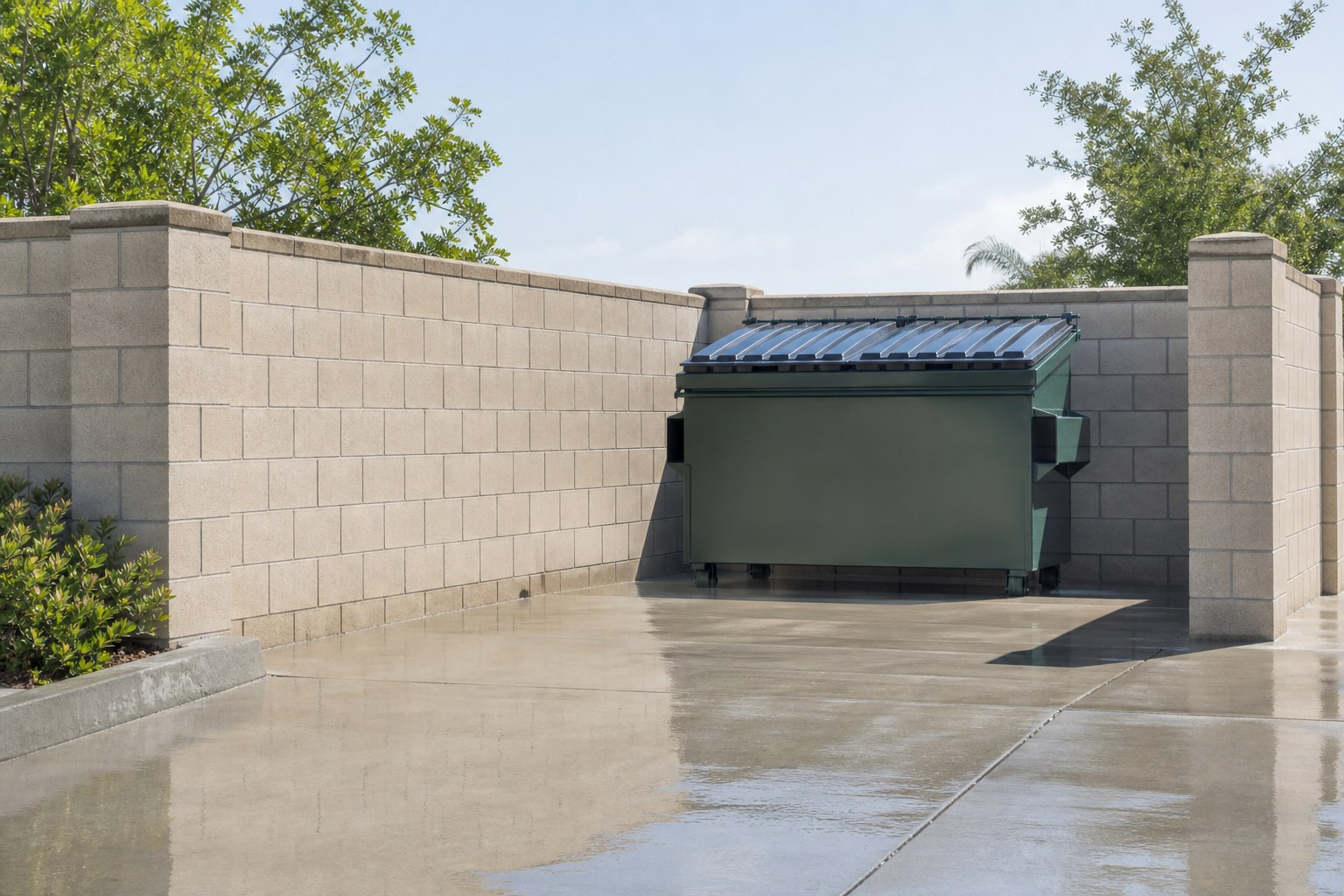
Dumpster pad cleaning is the hot water washing and degreasing of the concrete slab where your dumpsters sit. It includes the enclosure walls and the dumpster area around the bins. Food service pads need it monthly. Other commercial properties need it at least quarterly. It removes grease, food waste, bacteria, and odors. Those attract pests, create slip hazards, and can put grease into storm drains, which is illegal in California.
⚡ QUICK SUMMARY
Clean dumpster pads monthly for restaurants and food service, at least quarterly for every other business. Published price lists put a single pad at about $75 to $300 per cleaning. Heavy grease costs the most (Klein Pressure Washing, 2026). Grease and wash water from a pad cannot go to a storm drain; the crew must contain and recover it.
Nobody puts the dumpster enclosure on the brochure. But every tenant, customer, delivery driver, and health inspector walks past it. A neglected dumpster area smells, draws rats and flies, gets slick with grease, and leaks pollution into the storm drain. Here is why dumpster pad cleaning matters, how often to do it, and what a proper cleaning service looks like.
Action Pressure Washing LLC is a family owned commercial pressure washing company in Brentwood, California. We clean dumpster pads at shopping centers, medical buildings, and restaurants across Contra Costa County and the East Bay. Our team brings wash water recovery equipment to every job, so grease and dirty water never reach a storm drain.
What Is Dumpster Pad Cleaning?
Dumpster pad cleaning is a deep clean of the concrete slab and the enclosure walls. It covers the ground around the trash and recycling bins too. It uses degreaser and hot water to remove built-up grease, spilled food, sticky liquids, and grime. A good cleaning also neutralizes odors instead of masking them. On a commercial property, it recovers the dirty water instead of letting it run off.
Dumpster Pad vs Dumpster Area: What Gets Cleaned
The pad is the slab the dumpster sits on. The dumpster area is everything around it: the enclosure walls, the gate, the apron where trucks pull up, and the walkway your employees use. A clean dumpster area means all of it, not just the strip in front of the bin.
Trash pads are the greasiest spot on most properties. Bags leak. Grease bins overflow. Bins get dragged across the slab. Within a few weeks, the pad has a dark, slick film of grease and debris that a garden hose cannot touch.
Why Does Dumpster Pad Cleaning Matter?
Five reasons, and only one of them is about looks. Each one costs a business money when the dumpster area is ignored.
What a dirty dumpster pad costs you
Pests - Grease and food residue feed rats, roaches, and flies. Once they move in, they spread to the building.
Odor complaints - Rotting grease smells travel. Tenants, patients, and customers notice long before you do.
Slip and fall risk - Grease film on concrete is as slick as ice. Employees carrying trash bags are the ones who fall.
Health inspections - For restaurants and medical sites, a filthy trash area is an easy write-up.
Stormwater violations - Grease and wash water running from the pad to a storm drain flow untreated to creeks and the Bay.
Dirty Dumpsters Attract Pests: Pest Control Starts at the Pad
Dirty dumpsters are a buffet for rodents and insects. You can pay for pest control every month, but if the pad under the bins stays greasy, the pests keep coming back. Regular dumpster pad cleaning removes the food source. It is the cheapest pest control step most property managers skip.
Odors and Bacteria Drive Customers Away
Foul odors come from bacteria feeding on grease and food waste. Warm East Bay afternoons speed that up. When the smell drifts to the patio or the front door, customers leave with a bad impression of the whole business. Cleanliness at the back of the building protects the reputation at the front.
Slip Hazards and Safety Compliance
A greasy pad is a workplace safety issue. Employees haul trash across it every shift, often at night. Keeping the surface clean and dry is basic safety compliance for any business with staff. It is also far cheaper than one injury claim.
Storm Drain Rules
In California, it is illegal to let anything other than rainwater go down a storm drain. Storm drains have no filters, per the Contra Costa Clean Water Program. Cleaning products, food waste, and wash water are all on the do-not-discharge list.
⚠️ Important
Hosing a dumpster pad toward the parking lot drain is not cleaning. It is an illicit discharge. The property owner, not just the vendor, can be held responsible.
How Often Should Dumpster Pads Be Cleaned?
Food service pads should be cleaned monthly. Retail, office, and medical pads need it at least quarterly. Pads next to grease bins, in full sun, or shared by many tenants may need more. Regular dumpster pad cleaning on a set schedule is the only way to maintain a sanitary dumpster pad. Here is a simple schedule:
💡 Pro Tip
Schedule the cleaning for right after trash pickup. Empty bins can be rolled aside so the whole slab gets cleaned, not just the strip around them.
Tired of the smell behind your building? Add dumpster pad cleaning to your regular property maintenance.
Get a Free EstimateWhat Do Professional Dumpster Pad Cleaning Services Include?
Professional dumpster pad cleaning takes about an hour and follows a set process. Here is what our trained team does on every pad:
1Contain the area
Nearby storm drains are blocked. The low side of the pad is bermed so nothing runs off.
2Clear and pre-treat
Loose trash and debris are removed. A commercial degreaser goes on the slab, the walls, and the grease bin area, then dwells.
3Hot water pressure wash
Heated water breaks down grease that cold water only smears. Enclosure walls, gates, and the slab all get washed and rinsed.
4Deodorize and disinfect
An enzyme treatment kills the bacteria behind the smell instead of covering it up.
5Recover the wash water
Vacuum recovery pulls the greasy water off the slab. It leaves the site with us for proper disposal.
Pressure Washing vs Power Washing on a Dumpster Pad
Power washing means heated water. Pressure washing can be hot or cold. For a dumpster pad, heat is not optional. Cold water pushes grease around. Hot water melts it so the degreaser can lift it. Any pressure washing service you hire for dumpster pads should show up with a hot water machine and a way to recover the runoff. Want to see the difference hot water makes? Read our guide on removing oil stains from concrete. The same chemistry applies to grease on a trash pad.
How Much Does Dumpster Pad Cleaning Cost?
Published price lists from pressure washing companies put a standard single pad at roughly $75 to $150 per visit. Larger multi-dumpster enclosures run $150 to $250. Heavily greased pads run $200 to $300, per Klein Pressure Washing (2026). Local prices vary. Water recovery, enclosure size, and how long the grease buildup has been there all affect the quote. Monthly or quarterly contracts cost less per visit than one-time calls. Dumpster pad cleaning services are usually bundled with sidewalk and parking lot cleaning.
For a full picture of what commercial work costs, see our post on commercial pressure washing prices.
“Action cleans such a large area for such a good price... they are the best service vendor we've seen in a long time!”
- Dennis McDonald, property contact
Can You Clean a Dumpster Pad Yourself?
You can sweep it and pick up trash, and you should, weekly. But a real degreasing needs hot water, a strong degreaser, and a way to catch the runoff. A rental cold-water pressure washer will push grease around and send it straight to the drain. For a commercial property, that trade is not worth the risk.
How to Keep a Clean Dumpster Area Between Visits
Simple habits that maintain a clean dumpster area
Keep lids closed - Closed lids cut odors and keep rodents and insects out of the bins.
Bag everything - Loose food waste is what leaks onto the pad. Double bag anything wet.
Sweep weekly - A quick sweep of debris keeps the area from looking neglected between cleanings.
Report leaks fast - A leaking grease bin should be fixed the same week, not the same quarter.
Post the rules - Tenants and employees follow a short, clear sign. Cleanliness is a team habit.
How to Choose a Dumpster Pad Cleaning Service
Ask three questions. Do you use hot water? How do you handle the wash water? Can you put us on a monthly or quarterly schedule? A reliable cleaning service will answer all three without hesitation. Vendors who specialize in commercial property work will also offer solutions for the rest of the lot: sidewalks, drive-thrus, and parking areas. The importance of the wash water answer cannot be overstated. It protects you, not just the creek.
Dumpster Pad Cleaning FAQ
How long does a dumpster pad cleaning take?
About an hour for a standard single pad. Large enclosures or heavy grease can take two.
Does a clean dumpster pad really reduce pests?
Yes. Rodents and insects follow food and grease. Remove the buildup and they lose the reason to stay. Pair it with lids that close and regular pest control for best results.
Do you clean the dumpster itself?
Our dumpster pad cleaning covers the pad, the enclosure walls, and the surrounding area. Ask us about the bins when you book, or check with your waste hauler about a bin swap.
See the messiest corners we have cleaned in our before and after gallery. Then learn more about our commercial pressure washing services for shopping centers, medical buildings, and property managers in the East Bay. Contact us for a free estimate and a quick consultation on a cleaning schedule that fits your property.
About the Team
Action Pressure Washing LLC is a family owned pressure washing company in Brentwood, California. Our 5-person crew cleans commercial and residential properties across Contra Costa County and the Bay Area. We bring wash water recovery equipment to every job.
Make the Dumpster Pad the Cleanest Spot on the Lot
Monthly or quarterly dumpster pad cleaning. Hot water, degreaser, deodorizing, and full wash water recovery.
| Call (925) 626-4768 → | Get a Free Estimate |
